
Thinker · Inventor · Builder
Technology should give us superpowers.
I’m Nathalie. I lead EPIC — Extended Perception, Interaction & Cognition — at Microsoft Research, inventing ways for people to reason, discover, create, and collaborate with computers and AI.
Throughout my career, my north star has remained constant: technology should amplify human capability and solve the problems that really matter. I’m passionate about building the future — making bold ideas real enough to experience, then reflecting on what those experiences reveal to shape research, products, and the real world.
Expanding what people can do.
As we navigate a defining inflection point in artificial intelligence and spatial computing, that mission is more urgent than ever. My work builds the next generation of computational mediums — ones that give people the superpowers to reason, discover, create, and collaborate.
For me, impact is about changing how the world thinks and works: identifying the fundamental paradigms of human–computer interaction and writing the papers that count, bending the trajectory of what gets built next, and genuinely advancing what people can do — whether at scale, for millions of learners and knowledge workers, or up close, for a single team of neuroscientists making sense of the brain. I feel fortunate to have built a team that does exactly that.
AI as a New Medium
Making generative intelligence interactive and defining the next generation of interfaces.
Human-AI interaction frontier · interactive generative media · generative UIWhere I am today
I explore the frontiers of interactive generative AI: experiences people can see, touch, reshape, and think with. By combining language with direct manipulation, these experiences empower people to express what they mean and accomplish what they intend. I also explore the future of human–AI experiences through interfaces generated on the fly — ephemeral, ever evolving, and alive. I build and test these visions to learn what works and inform products for the next generation of human–AI collaboration.
Why it matters
AI can now generate documents, spreadsheets, interactive websites, complex applications, analyses, and workflows. But people still decide what matters, judge what is true, align with others, and own the outcome. Generative interfaces let them think faster, explore more possibilities, exercise better judgment, and act with confidence through mediums that respond fluidly to human intent and interaction.
Impact & influential work
Human–AI research is accelerating, and much of my impact comes from exploring its frontiers through rapid prototypes and live demonstrations. We write only the papers that count: AI-Instruments redefines fundamental HCI principles; ImaginationVellum introduces core novel capabilities that elevate people and invite the community to build; and Texterial challenges research thinking through provocative thought experiments. This work is featured in Microsoft’s New Future of Work reports, shaping how the company envisions knowledge work with AI. My research is reflected in products such as Microsoft Ink Canvas and Copilot App Builder, while my cross-company leadership helps teams across Microsoft make generative intelligence more interactive.
Key papers
- Texterial · CHI 2026
★ Honorable MentionA provocative thought experiment that reframes AI writing as shaping text like a material. - AI-Instruments · CHI 2025
★ Honorable MentionEstablishes a fundamental HCI principle: prompts can become reusable, reflective instruments. - ImaginationVellum · UIST 2025
★ Honorable MentionIntroduces novel spatial AI capabilities the community can build on for human-led ideation.
Key Speaking Engagements
- AI as a New Medium: Designing for Ambiguity and Emergence · Simon Fraser University Distinguished Lecture 2026
- Generative User Interfaces & Dynamic Experiences · Microsoft MLADS+ 2025Shared emerging generative-interface directions across Microsoft with 1,500+ attendees.
- Achievement Unlocked: The Future of Human-AI Experiences · ACM International Conference on Advanced Visual Interfaces 2024, keynote
- The Future of User Interfaces in the Era of AI · Microsoft Executive Briefing Center 2024Briefings for CEOs and senior customer leaders that showcased Microsoft’s AI leadership and helped advance several multimillion-dollar opportunities.
Product impact
- Generative interfacesMy research on generative interfaces and interactive generative media has influenced Power Apps, Copilot App Builder, and Copilot Labs.
- Novel human–AI interactionMy work on pen-driven interaction shaped novel AI experiences including Microsoft Ink Canvas and, earlier, Paint Cocreator.
- Cross-org thought leadershipTo help shape where the company goes next, I bring leaders across Microsoft* to the frontier of human–AI interaction so they can experience — and act on — the future we are building.
Building the future
Disruption by demonstration. We explore the frontier of what AI models can do through live demonstrations of generative AI as a deeply interactive, living medium. By building these visions, we discover what resonates, what empowers people, and which provocative ideas can shift thinking — such as interfaces that are ephemeral and constantly evolving. The EPIC blog offers a glimpse into the work we can share publicly, and a hint of what is still taking shape.
Ink, Touch & Spatial Thinking
Leveraging extended perception to build thinking mediums.
Pen · ink · spatial canvases · many devicesMy lifelong mission
My mission has always been to build true thinking mediums that amplify human perception and cognition. Multimodal interaction reduces latency and increases bandwidth between thought and action, bringing interaction closer to the speed of thought. Coupled with novel hardware capabilities, it opens new forms of interaction and spatial thinking. I worked closely with researchers, designers, hardware prototypers, and visionaries like Ken Hinckley and Bill Buxton to bring these possibilities to life.
Why it matters
Thinking happens through movement: at the tip of a pen, across a canvas, and between devices. Digital ink, touch, and fluid cross-device experiences give ideas a spatial, tangible form, allowing people to sketch, pin, connect, and reorganize their reasoning into higher levels of creative synthesis.
Impact & influential work
My work influenced both the academic field and Microsoft products. Research on active inking, spatial canvases, and cross-device interaction established new foundations for thinking with pen, touch, and multiple devices. Inside Microsoft, I crafted and delivered a Disruptive Technology Review directly to Satya Nadella and his leadership team, advocating for ink as a cross-product strategy. This led to organizational changes in the following months, shaping inking experiences across Microsoft Surface, with capabilities reaching millions of people. This research now informs ink capabilities within Copilot experiences, including live ink-to-image in Paint Cocreator. My cross-device research also influenced the Windows Companion Experience direction, informing the design of interactions that span multiple devices.
Key papers
- ActiveInk · CHI 2019
★ Honorable MentionReframed ink as an active layer for thinking and action. Informed by the large-scale study As We May Ink? (CHI 2017). - DataInk · CHI 2018
★ Honorable MentionEnabled people to directly and creatively draw data-driven visualizations with pen and touch. - In-Air Device Formations · UIST 2021Established spatial device formations as a foundation for fluid multi-device experiences. This line of research began with the insight that hardware can fundamentally change how interfaces respond — as Microsoft Surface Tilt (UIST 2020) demonstrated for inking.
Key Speaking Engagements
- (Th)inking · Disruptive Technology Review for CEO Satya Nadella & Microsoft’s Senior Leadership Team (incl. Panos Panay, Rajesh Jha), 2019
- The Superpowers of Digital Ink · Microsoft TechFest 2019, keynoteKeynoted Microsoft Research’s company-wide innovation forum for 500+ attendees, connecting frontier research with product teams to accelerate technology transfer.
- Envisioning Fluid Cross-Device Experiences · Microsoft Faculty Summit 2019Presented a vision for fluid cross-device experiences to 500+ academic and industry leaders, extending the research’s reach and influence beyond Microsoft.
Product impact
- Ink as an intelligent capabilityResearch on inking informed ink capabilities within Copilot experiences. Prior to that, it shaped core experiences in OneNote, including ink beautification, editable handwriting, and ink-to-image.
- Pen-first productivityPen-first interaction concepts transferred into Action Pen and ink gestures across Word, OneNote, and Excel, enabling people to mark up and annotate documents, edit them with ink, draw shapes and transform them into diagrams, and directly input data into spreadsheets with a pen.
- Informing Microsoft Surface experiencesResearch into how people use ink informed features for immediate access to writing, including Quick Note on Surface. Other explorations moved into product incubations — some released publicly as Microsoft Journal — while broader findings informed the design of the Surface and Surface Pen hardware lines to reduce friction between thought and digital capture.
- Continuity across devicesCross-device research shaped the Windows Companion Devices Experience effort, informing interactions that maintain continuity as people move between devices.
Data, Visualization & Sensemaking
Seeing, understanding, and sharing complex data.
Networks · visual analytics · storytelling · learningThe foundational roots
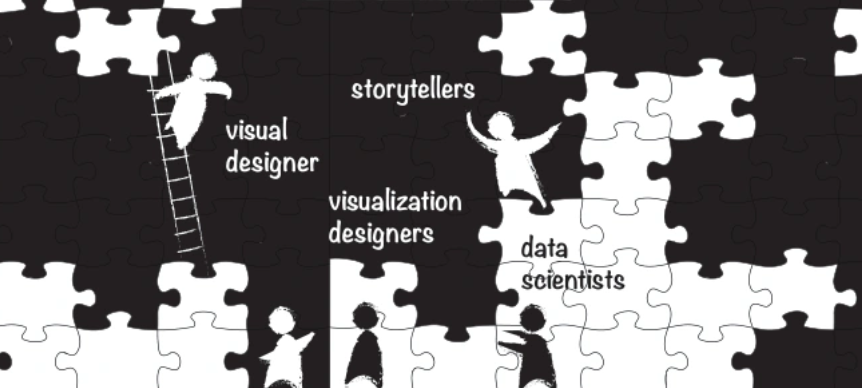
I spent a decade advancing research in information visualization, visual analytics, and data-driven storytelling. My research was forged by wrestling with exceptionally hard, complex data. I devised interactive techniques to enable scientists in social science and physics to understand how massive social networks are structured and evolve over time, and to help neuroscientists identify patterns in the immense, intricate connectivity of the human brain. This research taught me how people perceive complex information and how scientists make sense of it to achieve breakthroughs. The visual exploration techniques I conceived sought to amplify cognition and sensemaking and accelerate scientific research. Over time, my aspiration evolved into a deeply personal mission. Driven by watching my own children navigate the world, I devised storytelling techniques to help the general population comprehend complex issues and learn, and sought to increase visualization literacy as the world around us increasingly suffered from data disinformation.
Impact & influential work
I advanced the interactive exploration of complex data. My research led to novel visualization techniques for dense, small-world, multimodal, temporal, and topological networks, as well as overlapping sets. Compact Euler Diagrams, LineSets, MatrixExplorer, NodeTrix, and MatLink made these complex structures explorable and helped people make sense of data in neuroscience, social science, and history — from fMRI brain connectivity to large, evolving networks. I set a research agenda for natural interaction in visualization beyond mouse and keyboard, and later delivered on it through award-winning systems including SketchInsight, DataInk, and InChorus.
I also explored visualization as a medium for communication and learning. I established data comics as a new genre of storytelling, then fostered a community and research agenda on data-driven storytelling. I studied the impact of these techniques in the wild by evaluating data comics at a large public event and, with Microsoft Education, deploying interactive learning experiences in schools to strengthen visualization literacy.
Results from this research had an impact on flagship Microsoft products, including Power BI, Visual Studio, and Microsoft 365 Workplace Analytics.
Milestone papers
- Visualization Literacy at Elementary School · CHI 2017 ★ Best PaperDeveloped interactive learning experiences to strengthen children’s visualization literacy, informed by a large-scale analysis of 2,000+ data visualizations across Washington State’s K–4 core curriculum, in collaboration with Microsoft Education and studied in classrooms.
- The Emerging Genre of Data Comics · IEEE CG&A 2017 Established data comics as a fundamental new genre of data-driven storytelling, then extended it to dynamic networks with Graph Comics (CHI 2016) and interactive experiences with Interactive Data Comics (IEEE VIS 2021).
- Beyond Mouse and Keyboard · IEEE InfoVis 2012Set the agenda for natural interaction with visualization, then delivered it through experiences such as DataInk (CHI 2018), for pen-and-touch drawing, and InChorus (CHI 2020), for consistent pen, touch, and speech interaction.
- Hybrid Visualization of Networks · IEEE InfoVis 2007 A reference matrix + node-link technique for dense networks, part of a body of research that put matrix visualization on the map — from MatrixExplorer (IEEE InfoVis 2006) to Brain Connectivity Comparison (CHI 2013, Best Paper), which led to ConnectoScope.
Key Speaking Engagements
- Data-Driven Storytelling · VISIGRAPP 2021, keynoteConnected visualization research with narrative structure, showing how data can become memorable and persuasive stories.
- Data-Driven Storytelling · Women in Data Science (WiDS), Stanford 2018Brought data comics and narrative visualization to a cross-disciplinary community of women shaping the future of data science.
- The Superpower of Visualization · The Connected Past, Oxford 2018, keynoteShowed humanities researchers how visualization can reveal patterns, relationships, and uncertainty in complex historical data.
- Interactive Exploration of Complex Networks · Graph Symposium 2016, keynoteShared hybrid matrix and node-link approaches that make dense networks more tractable for analysis.
- Visual Exploration of Complex Data · NSF Frontiers of Visualization 2014; CANVAS 2014Helped define an agenda for interactive visual analysis of complex, high-dimensional data.
- Exploring Data with Matrix Visualizations · NetSci 2011, keynoteBrought matrix-based network visualization to the network-science community as a powerful alternative to node-link diagrams.
Product impact
- Visualization across Microsoft productsNetwork and set visualization techniques transferred into Code Maps in Visual Studio, Microsoft 365 Workplace Analytics (now Viva Insights), and Microsoft 365 Defender.
- Open-source tools & scientific practiceNetwork visualization techniques shipped as open-source projects including NetworkCube and The Vistorian, and were deployed at the Integrated Brain Imaging Center (IBIC) at the University of Washington.
- Data-driven storytelling in Power BIData-driven storytelling research led to Timeline Storyteller, which shipped as a custom visual for Power BI and was released as an open-source project on GitHub.
Recognition & service
Honors
- IEEE Visualization Academy · inducted
- Awarded publications: 4 Best Papers & 9 Honorable Mentions · CHI, UIST, PacificVis, INTERACT
- See the awarded work ↓
- Invited keynotes · ACM AVI, VISIGRAPP, NetSci, The Connected Past (Oxford), Graph Symposium, NSF Frontiers of Visualization, Microsoft TechFest
Conference leadership
- Papers Chair · ACM UIST 2023, IEEE VIS 2020
- Subcommittee Chair, ACM CHI · created its first visualization subcommittee (2017–18)
- IEEE VIS organizing roles · posters, tutorials, workshops, BOF (2012–19)
Editorial & community
- Associate Editor · IEEE TVCG, IEEE CG&A
- Dagstuhl Seminar co-organizer · Data-Driven Storytelling (2016), Visual Analytics of Multilayer Networks Across Disciplines (2019)
- NSF Frontiers of Visualization · invited participant
- Invited panelist & advisor for women in tech · SF Tech Week, Women in Data Science (WiDS), Women at Microsoft, Women in Vis, Girls Who Code
Awarded publications
Mention Award (top 5%) · Best Paper Award (top 1%)
AI as a new medium
- Texterial · CHI 2026, MentionTreats text as a malleable material you shape, rather than prompt, when writing with LLMs.
- ImaginationVellum · UIST 2025, MentionA generative ideation canvas with spatial prompts, generative strokes and ideation history.
- AI-Instruments · CHI 2025, MentionTurns prompts into reusable interface instruments that people can reflect on and reapply.
- Intent Tagging · CHI 2025, MentionMicro-prompting: tagging fine-grained intents to steer human-GenAI co-creation.
Ink, Touch & Spatial Thinking
- Sketchnotes · CHI 2021, MentionDesign space and strategies for effective visual note-taking.
- InChorus · CHI 2020, MentionConsistent pen, touch and speech interactions for visualization on tablets.
- ActiveInk · CHI 2019, MentionThinking with data through active reading and inking over visualizations.
- DataInk · CHI 2018, MentionDirect, creative drawing of data-driven visuals with pen and touch.
- SketchInsight · PacificVis 2015, Best PaperNatural data exploration by sketching charts with pen and touch on whiteboards.
Data, Visualization & Sensemaking
- Visualization literacy at elementary school · CHI 2017, Best PaperHow young children learn to read and build charts, with a tangible teaching approach.
- Brain connectivity comparison · CHI 2013, Best PaperTechniques for comparing weighted graphs of human brain connectivity.
- ClassSearch · CHI 2011, MentionInforming classroom approaches to building web search skills through social learning.
With gratitude
I have been lucky to stand on the shoulders of giants. Working alongside these remarkable people has shaped my mind, sharpened my thinking, and shown me what research can be.
- Ken Hinckley
- Bill Buxton
- Ben Shneiderman
- Sheelagh Carpendale
- Jean-Daniel Fekete
- Bongshin Lee
- Benjamin Bach
- Fanny Chevalier
- Christophe Hurter
- Hugo Romat
- Nicolai Marquardt
- Kori Inkpen
- Steven Drucker
- Tim Dwyer
- Mar Gonzalez-Franco
… and many more.